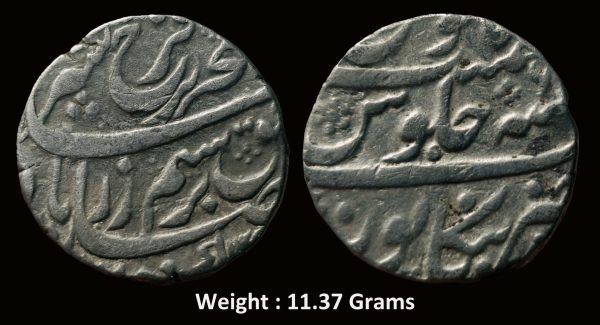
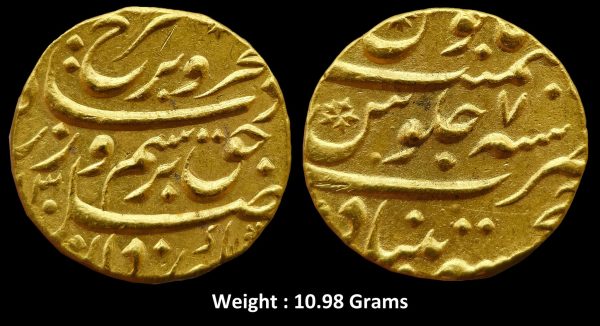
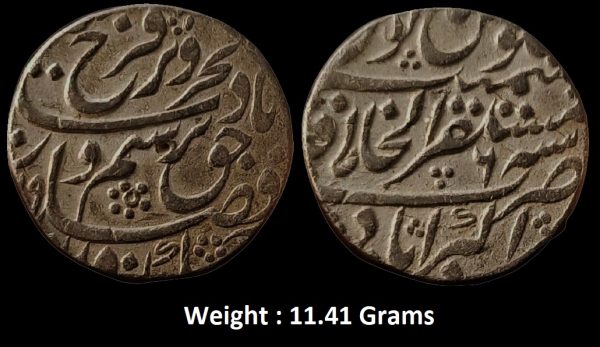
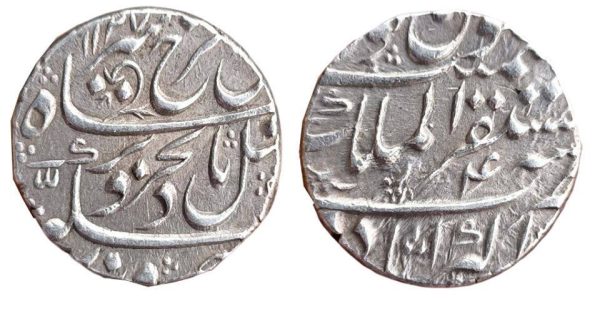
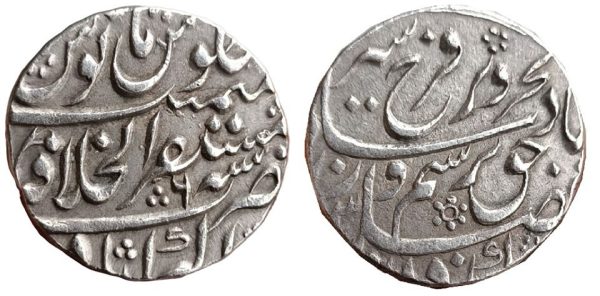
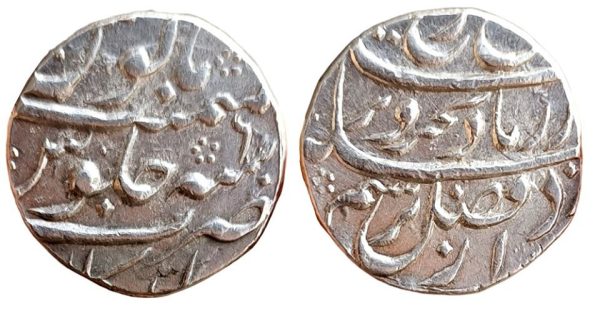
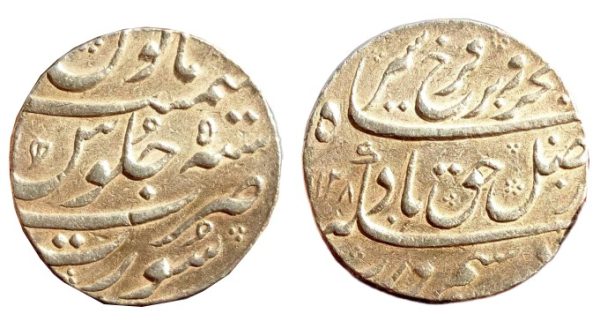
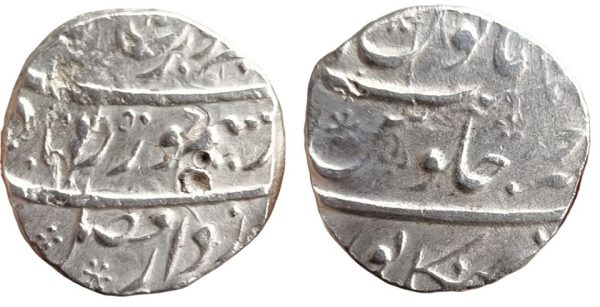
Farrukhsiyar ( 20 August 1683 – 9 April 1719), also spelled as Farrukh Siyar, was the tenth Mughal Emperor from 1713 to 1719. He rose to the throne after deposing his uncle Jahandar Shah. He was an emperor only in name, with all effective power in the hands of the courtier Sayyid brothers. He was born during the reign of his great-grandfather Aurangzeb, as the son of Azim-ush-Shan (the second son of Emperor Bahadur Shah I) and Sahiba Niswan. Reportedly a handsome man who was easily swayed by his advisers, he was said to lack the ability, knowledge and character to rule independently. He was executed by Maharaja Ajit Singh of Marwar.
Muhammad Farrukhsiyar was born on 20 August 1683 (9th Ramzan 1094 AH) in the city of Aurangabad on the Deccan plateau, to a Kashmiri mother, Sahiba Niswan. He was the second son of Azim-ush-Shan, the Grand son of emperor Bahadur Shah I and a great grandson of emperor Aurangzeb.
In 1696, Farrukhsiyar accompanied his father on his campaign to Bengal. Aurangzeb recalled Azim-ush-Shan from Bengal in 1707 and instructed Farrukhsiyar to take charge of the province. Farrukhsiyar spent his early years governing Dhaka (in present-day Bangladesh) the capital city of Bengal Subah.
In 1712 Azim-ush-Shan anticipated Bahadur Shah I’s death and a struggle for power, and recalled Farrukhsiyar. He was marching past Azimabad (present-day Patna, Bihar, India) when he learned of the Mughal emperor’s death. On 21 March, Farrukhsiyar proclaimed his father’s accession to the throne, issued coinage in his name and ordered khutba (public prayer).On 6 April, he learned of his father’s defeat to an alliance orchestrated by Zulfiqar Khan Nusrat Jung between Jahandar Shah, and his younger brothers Rafi-us-Shan and Jahan Shah. Although the prince considered suicide, he was dissuaded by his friends from Bengal.